Autonomous mowing for airports and airfields
Airfield grass is one of the largest continuous mowing jobs anywhere, it is safety-relevant rather than cosmetic, and every hour of it puts a person and a vehicle somewhere they need clearance to be.
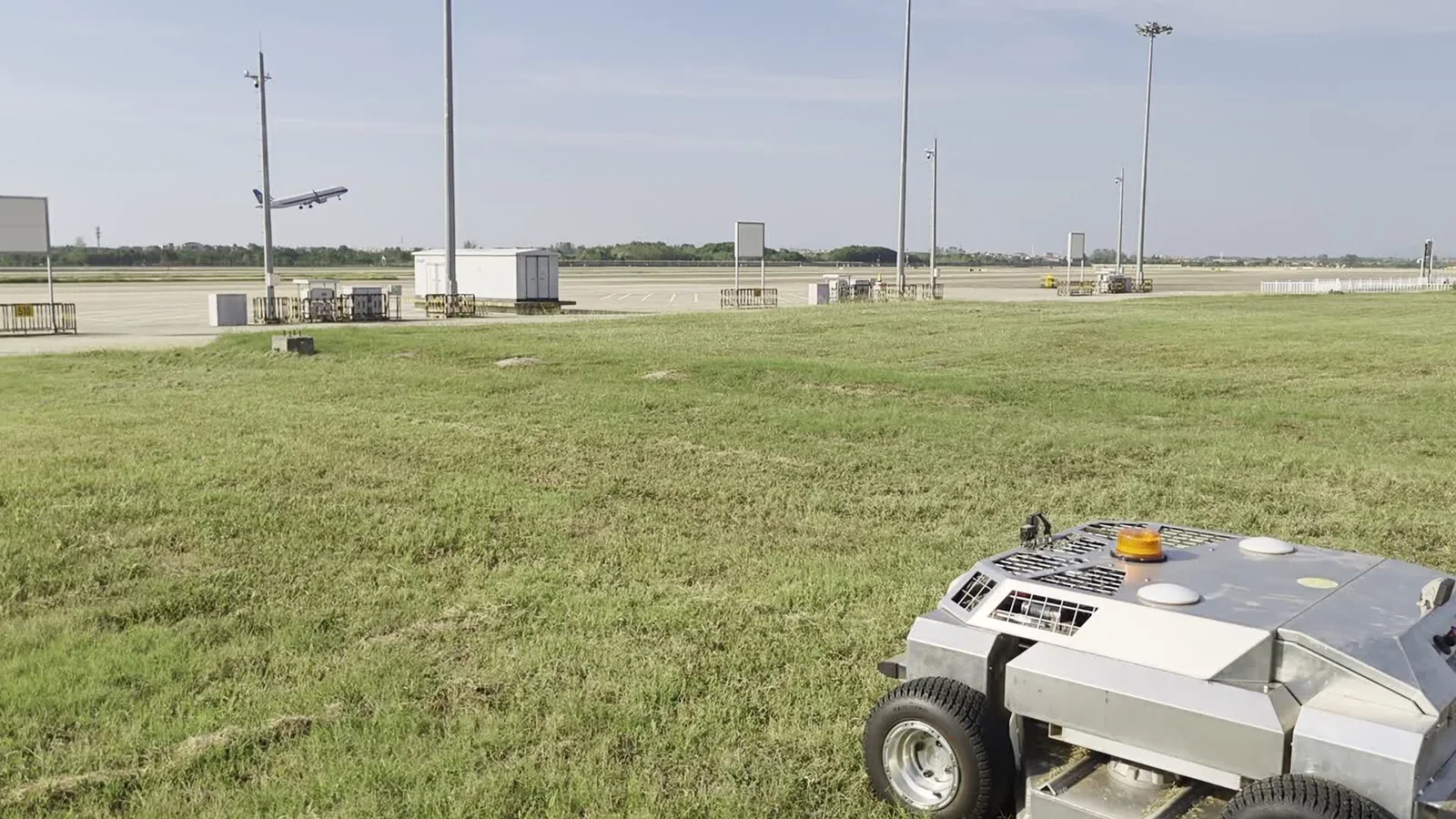
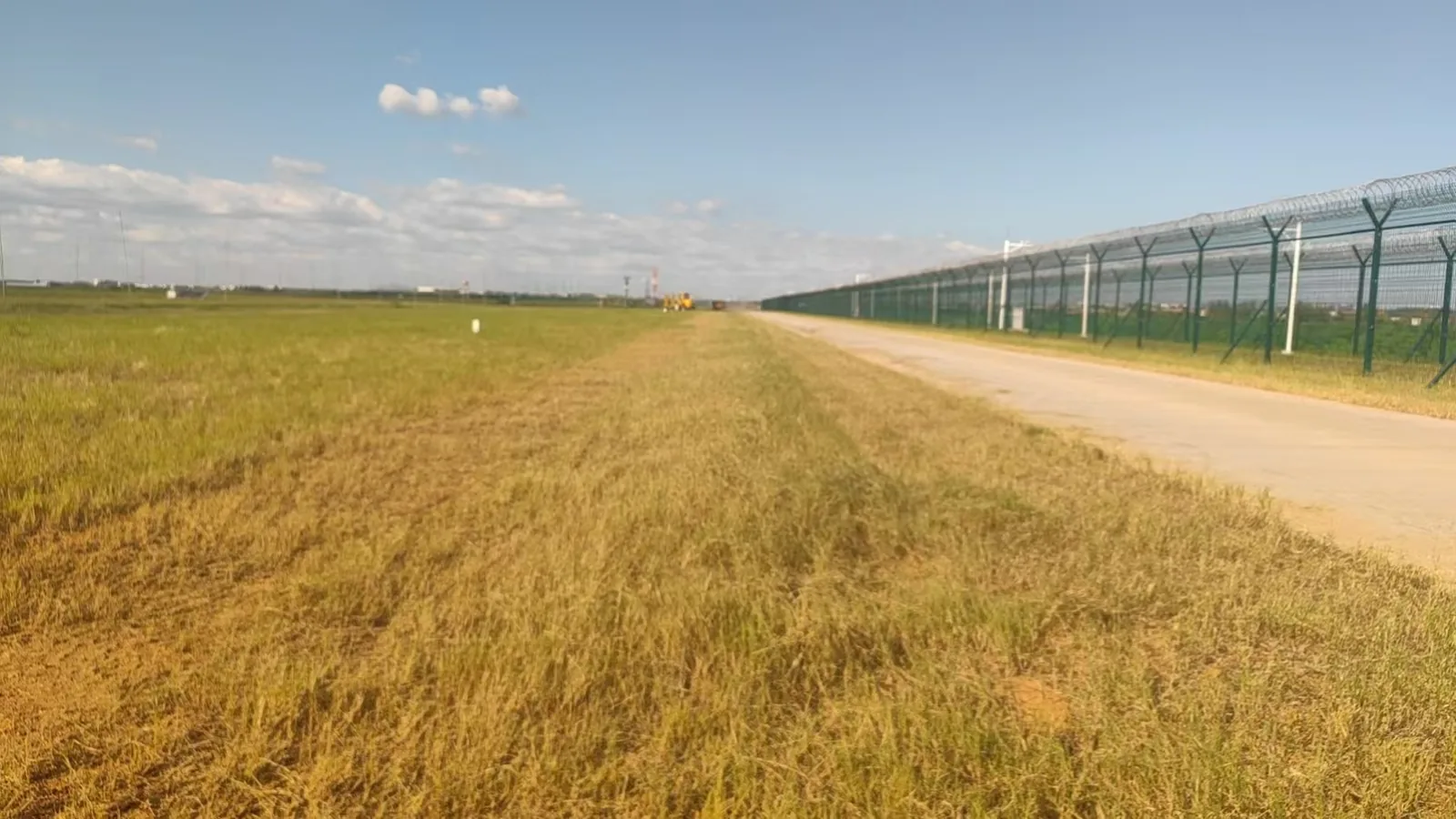
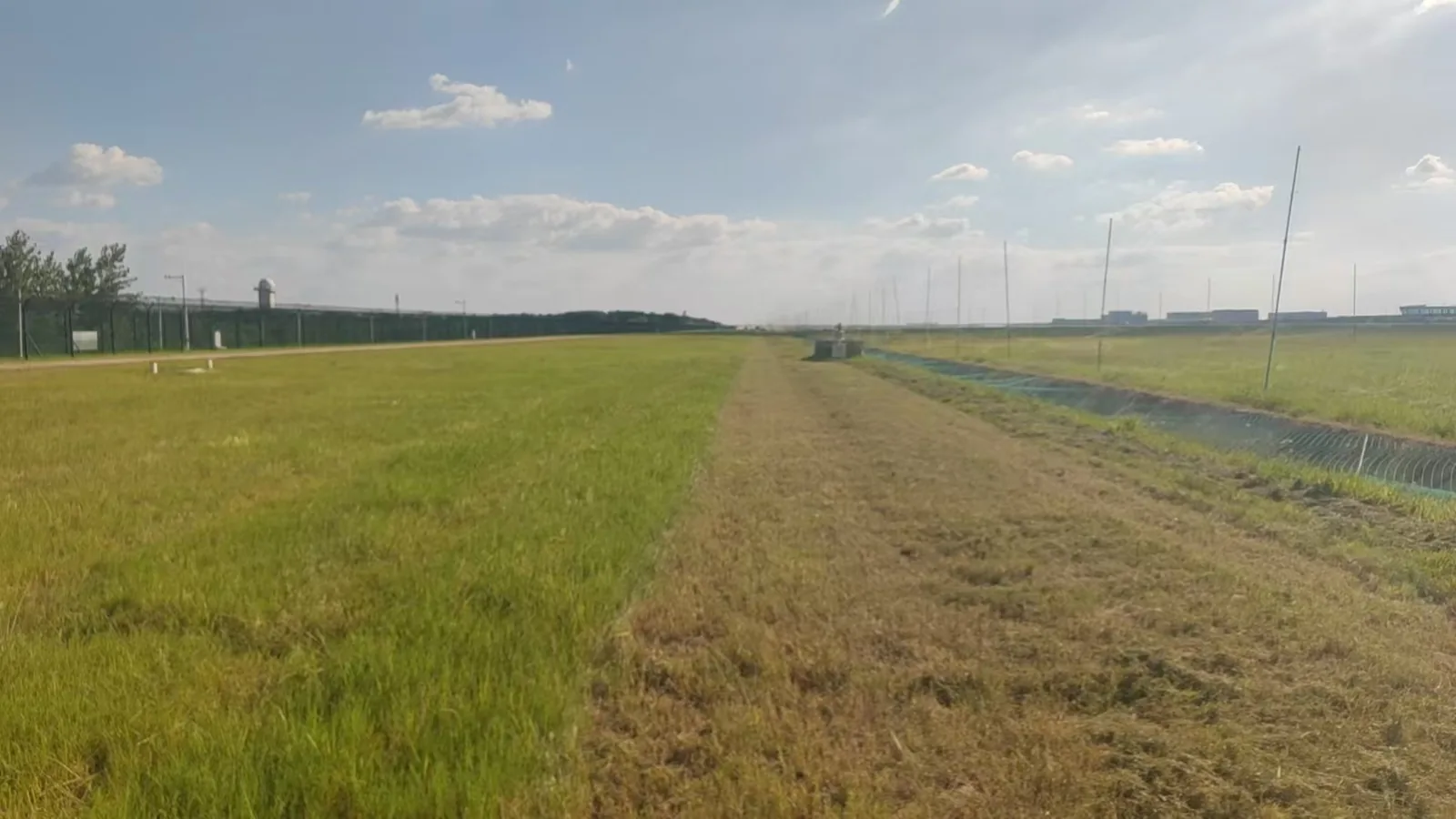
Already in service, not a concept. The A60i is currently operating at international airports in China, mowing perimeter fence lines, patrol roads and the open ground between terminals and taxiways on a recurring schedule. We keep specific airport names confidential at our customers' request, but every photo and video on this page is unedited footage from that work, not a staged demo.
The airfield mowing problem
Airport grounds departments are managing hundreds of acres of grass whose height is not an aesthetic decision. Vegetation height influences wildlife attraction, sightlines to signage and lighting, drainage and fire load. It has to be held, on schedule, across the whole season.
At the same time, airfield mowing is expensive in a way ordinary grounds work is not:
- Every vehicle movement is controlled. Badging, escort, radio, coordination windows. The cost of a mowing hour on an airfield is never just the mowing hour.
- Windows are short. Work often has to fit around traffic, which fragments a job that would otherwise be pure open running.
- The acreage never shrinks. Infields, verges, safety areas, perimeter, landside grounds — there is always more of it than there is staff.
An unattended machine changes the arithmetic on all three, because it converts mowing hours into machine hours that do not require a person on the airfield for the duration.
What the A60i brings to an airfield
Twelve hours on a tank, with no charging infrastructure airside
Putting a charging station and a power run into an airfield infield is not a small project. The A60i's range extender charges the pack while it mows, so one tank is twelve hours of work and refuelling is a fuel can at a location you choose. Nothing gets built, nothing gets trenched, and no cabling is added to ground that has to stay clear. Why that matters →
Software boundaries around everything that must not be touched
Work areas and exclusion zones are defined in software to about one inch of RTK accuracy — around lighting and sign installations, antennas, drainage structures, cable runs and any area your operations procedures require to be kept clear. There is no boundary wire to install across an airfield, and nothing buried that a future works project can sever.
A light machine on soft infield ground
Airfield infields are drained but not manicured, and they go soft. The automotive-grade all-aluminium body makes the A60i 30 to 50 percent lighter than comparable machines, which on turf tires keeps ground pressure low — less rutting on wet ground, and a machine that is far easier to recover if it does find a soft spot.
Consistent height, held on a schedule
Cutting height is set remotely, and the machine cuts on a cycle rather than when staffing allows. For a grass-height policy that has to be demonstrated rather than intended, a mowing cycle that does not slip is the point.
Operational scope, stated plainly. Any equipment operating within an airport's movement area is subject to that airport's own procedures, driver and vehicle rules, and ATC coordination — an autonomous machine does not change that and we will not pretend otherwise. In practice, airports start with landside grounds, perimeter and non-movement areas, and extend airside under their own safety case. We will support whatever documentation your operations and safety teams need for that assessment.
Where it fits, in order of how easy it is to start
- Landside grounds — terminal frontage, car park verges, access road margins, admin and cargo areas. No airside access required at all.
- Perimeter and fence lines — long linear running, the job nobody enjoys, and the one that slips first when staff are short.
- General aviation fields and smaller airports — where the whole grounds operation is one or two people and the acreage is unforgiving.
- Infields and safety areas — the largest acreage, and the one that follows once your safety case is written.
Airport questions
How much ground can one airport mower cover?
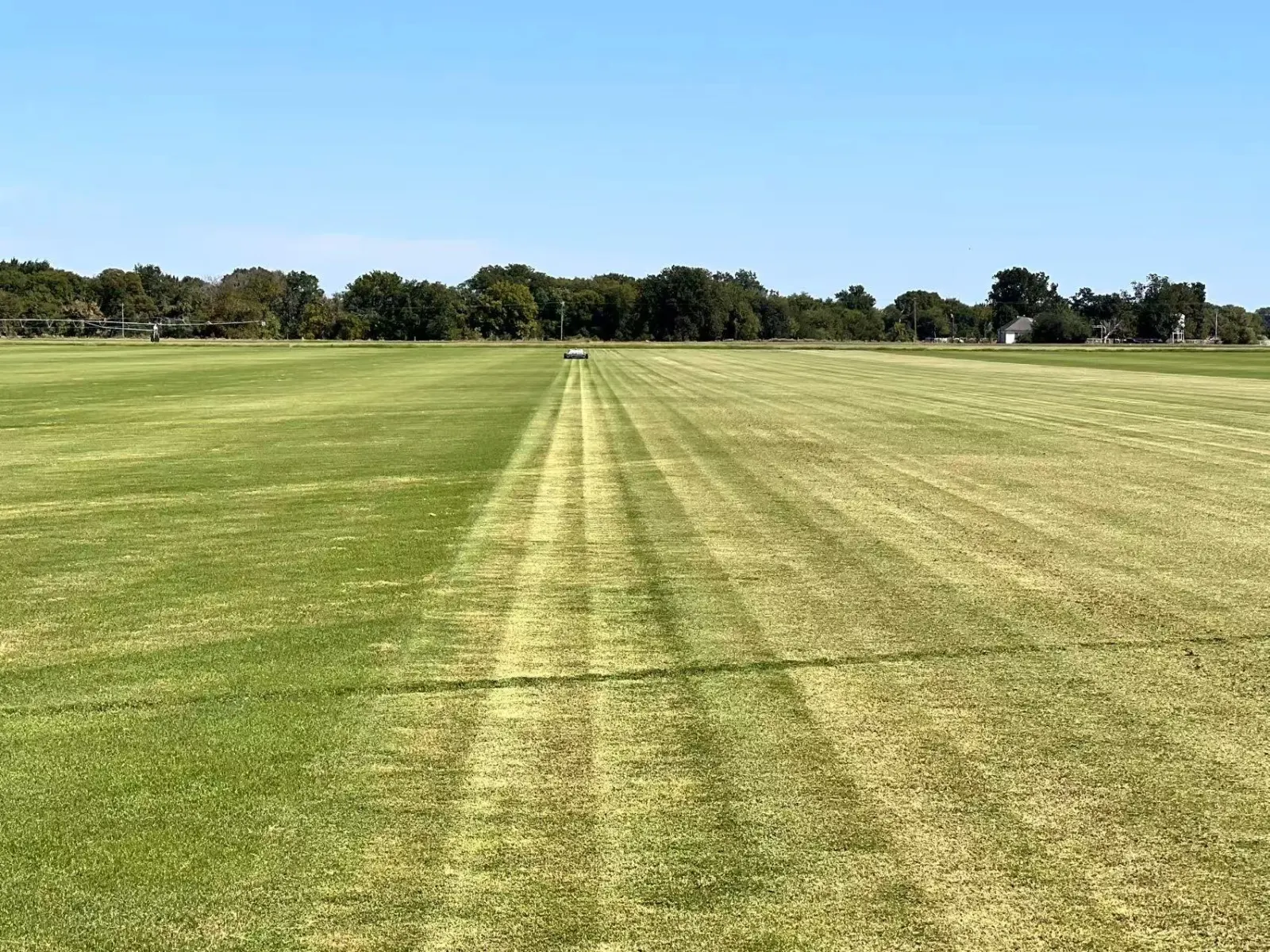
Roughly 15 to 21 acres on one tank, up to twelve hours of work per fill. On long uninterrupted airfield runs the machine is at its most efficient. Send acreage, layout and your cutting frequency and we will give you a planning figure and a realistic machine count.
What happens if the mower loses GPS correction on an airfield?
It stops rather than continuing on a degraded solution. On an airfield that is the only acceptable behaviour, and correction-source planning is part of commissioning.
Can an autonomous mower be kept out of specific airfield areas absolutely?
Yes — exclusion zones are defined in software at about one inch of accuracy, and obstacle detection and an emergency stop are on board. The zones are set once and are not dependent on an operator remembering them at 4am.
Do you supply documentation for an airport safety assessment?
Yes. Specifications, operating behaviour, failure modes and compliance documentation — tell us what your safety and operations teams require and we will send it before you commit to anything.
Can an airport trial a robotic mower landside first?
That is exactly how we would recommend starting: landside grounds or perimeter, where there is no movement-area question, then extend once your own people have watched it work.
Why airfields and sod farms are the two best cases for autonomous mowing →