Robotic mowing for sports fields and campuses
An athletic complex has a mowing schedule dictated by a booking calendar, not by staffing. The value of an autonomous machine here is that the schedule stops depending on who is available that week.
The scheduling problem, which is the real problem
On a multi-field complex, cutting has to fit between practices, games, tournaments and maintenance windows. That is already a puzzle. Then somebody is out, or the season starts three weeks before the seasonal staff do, or the district freezes a position, and the puzzle becomes a backlog.
A backlog on athletic turf is not cosmetic. Grass cut late is cut too short when it finally happens, which stresses the plant going into the part of the season it can least afford it, and produces exactly the thin, worn surface that generates complaints and injury concerns.
An autonomous machine cutting on a fixed cycle takes that failure mode off the table for the acreage it covers.
What the A60i fits, on a campus
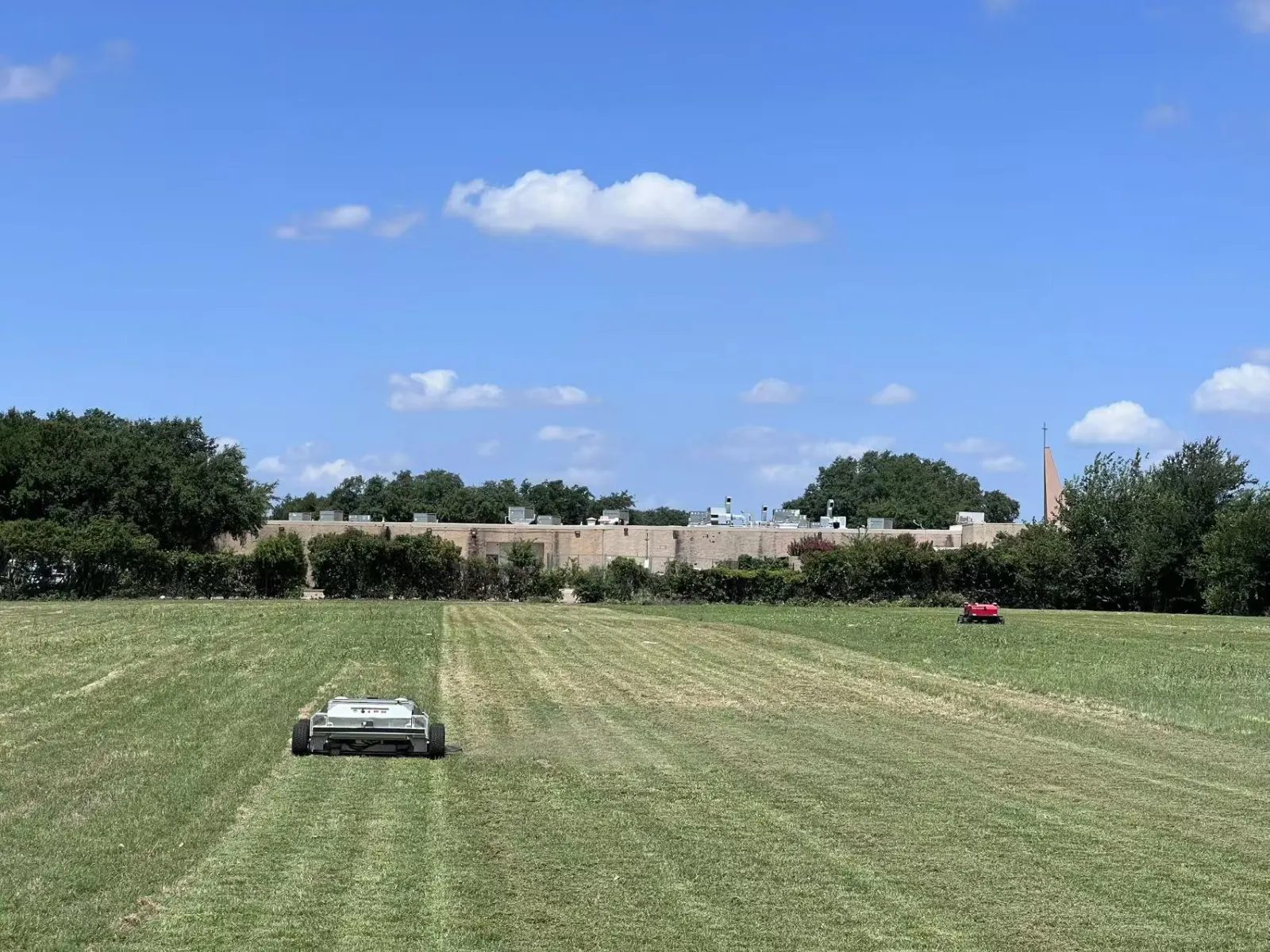
- Practice and multi-use fields. Large, open, cut constantly, tolerant of a rotary cut — the best fit on any campus.
- Field surrounds and out-of-play acreage. The ground that gets cut last and shows it.
- Campus lawns and open grounds. Long uninterrupted runs where a 60-inch deck is efficient.
- Not: high-specification competition surfaces that are managed to a reel cut, or synthetic fields, which need a different machine entirely.
Off-hours operation on a site full of people
Campuses are occupied. That constrains mowing to windows when fields are clear, which is exactly when a conventional crew is expensive to have on site.
A machine quiet enough to work at first light or after close, without an operator, uses those windows instead of competing for them. It also removes the routine safety exposure of running powered equipment around students and spectators, because the machine works when they are not there.
Striping, which people do notice here
Athletic fields get photographed. RTK-guided routing produces the same pattern every cycle rather than whatever a random-pattern robot happened to walk, and the pattern direction is a setting, so it can be alternated across cuts the way a groundskeeper would.
The other half of surface quality is what the mower does to the field. The A60i's automotive-grade all-aluminium body puts it 30 to 50 percent lighter than comparable machines, so a surface cut two or three times a week is not also being compacted two or three times a week — which on a playing surface is a wear and safety question, not a cosmetic one.
Passes butt edge to edge at about one inch of positioning accuracy, so there is no overlap band and no missed strip — the two things that make an otherwise good cut look amateur.
Procurement notes for schools and districts
- The comparison is usually a position, not a machine. If the alternative under discussion is an unfilled grounds vacancy that has been open for two seasons, that is the honest comparison to put in the paper.
- Capital vs operating budget. The machine is capital; the labour it displaces is operating. In many districts those are different approvals, which is a process problem rather than an economics one — but it is worth planning for.
- Multi-site use counts. One machine moved between two or three campuses multiplies acre-cuts against a single capital line. That is usually the strongest case in a district.
- The price is public. $39,800 USD ex-works, on the price page, which makes budget paperwork easier than a quote-on-request process.
Questions from grounds departments
Is it safe to run around a school site?
Onboard obstacle detection, emergency stop, and software-defined work areas keep the machine where you put it. Standard practice is still to schedule it into windows when the fields are clear, which is the main reason to buy a machine that works unattended at 5am.
How many fields can one machine keep on cycle?
Roughly 15 to 21 acres on one tank, up to twelve hours of mowing per fill rather than stopping to charge. Tell us your field count, acreage and cutting frequency and we will give you a planning figure rather than a brochure one.
Can it move between campuses?
Yes — it is trailered like any other grounds machine. Each site needs its work areas defined once, after which the machine can be moved between them.
What about competition surfaces?
If a field is managed to a reel cut, keep it on a reel. The A60i is a rotary machine and belongs on practice fields, surrounds and general campus acreage.
Can we see one before the budget cycle?
Yes. Request a demo with your location and we will arrange it, plus the documentation a procurement process usually asks for.