Robotic mowers for landscape contractors
For a contractor the question is not "does it mow". It is whether an unattended machine changes crew capacity, route density and bid economics enough to justify $39,800 of capital. Sometimes it does. Often it does not. Here is how to tell which.
Where a contractor makes money on this machine
Three business models work, and they have one thing in common: the machine racks up acre-cuts without racking up crew hours.
1. Large single accounts, machine parked on site
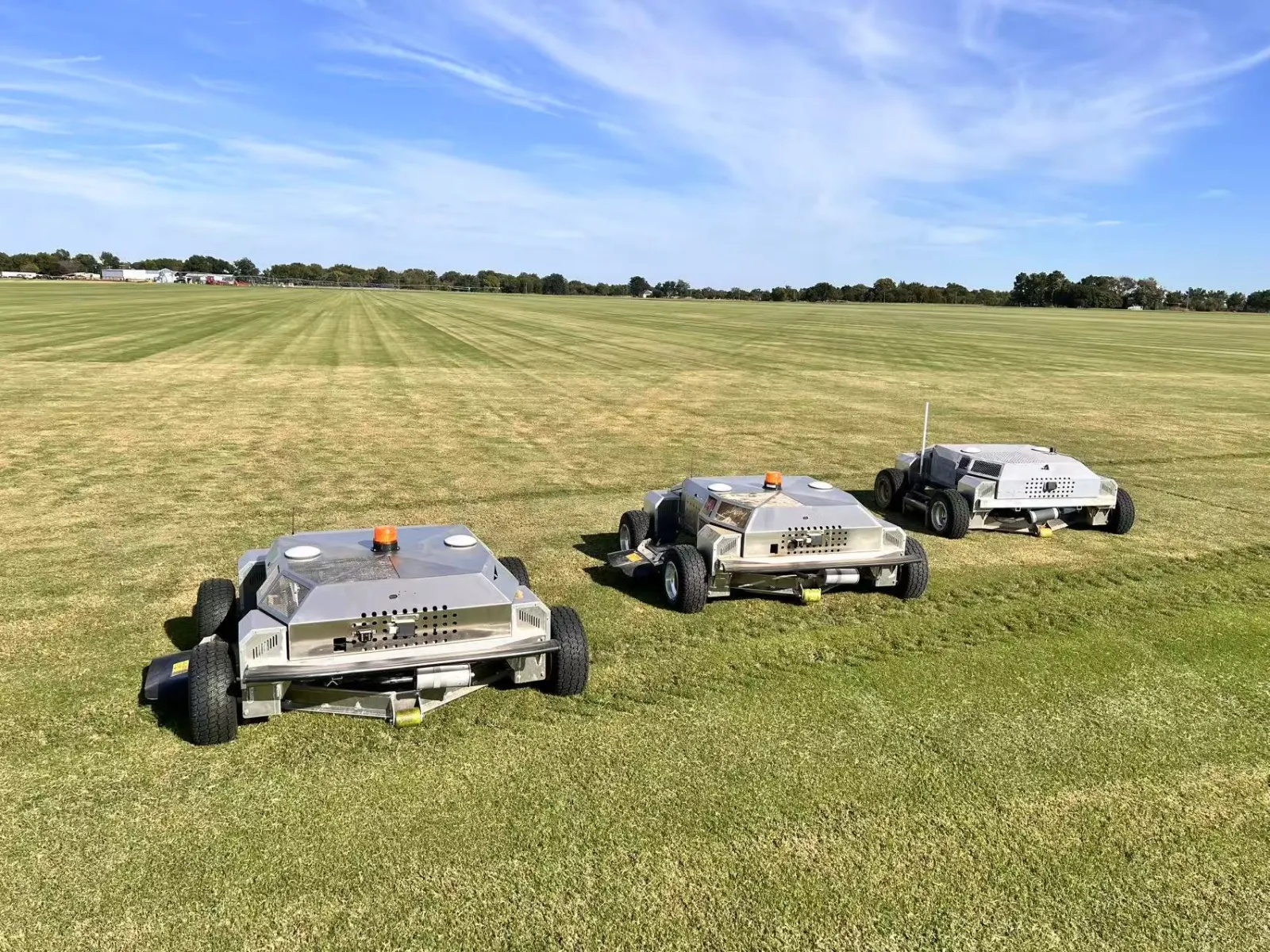
A corporate campus, a distribution centre, a large HOA common area, a solar site, a sod farm. The machine lives on the property, cuts a full twelve-hour shift on one tank of fuel, and a crew visits for trimming, detail and service rather than for the mowing itself. Route time collapses because the mowing no longer requires a truck to arrive.
2. Route densification
The machine handles the biggest account on a route unattended, which frees a crew to add accounts within the same drive time. This is the version where the return shows up as revenue rather than as cost saving, and it is usually the larger number.
3. Winning work you currently cannot bid
Large acreage jobs that need frequent cutting are often uncompetitive to bid with crews at current labour rates. A machine on site changes the cost structure of that bid. Contractors who have won accounts this way generally report that as the reason for the purchase, not the mowing saving on existing work.
Where it does not pay, and you should know before ordering
- Residential routes. Twenty small properties a day means transport, gates, tight turns and constant setup. A crew with zero-turn mowers stays far ahead.
- Accounts under about two acres. The acre-cut count never reaches the level where the saving overtakes the capital.
- Highly detailed properties. If most of the labour on an account is edging, beds and trimming rather than open mowing, the machine addresses the smaller half of the job.
- Accounts you might lose next season. Payback is measured in seasons. A one-year contract on a competitive rebid is a thin basis for a capital purchase — unless the machine is portable across your book, which it is.
The operational realities nobody mentions in a brochure
Somebody still has to own it. Refuelling, blade changes, moving it between properties, reacting when it stops. That is a small fraction of the hours it displaces, but it is not zero, and it needs to be assigned to a person rather than assumed.
RTK correction has to exist at every site. Network subscription or a base station. This is routine but it is a per-site setup step, not a plug-and-play one.
Transport. It trailers like any other grounds machine, and being 30 to 50 percent lighter than comparable machines it goes on light-duty equipment rather than needing a heavy trailer and the truck to pull it. If your model is moving it weekly between accounts, factor that time in — it eats into the very hours the machine saved.
Client perception cuts both ways. Some clients see an autonomous machine as evidence you are running a modern operation. Others ask why they are paying crew rates for a machine that works alone. Decide how you are going to answer that before the first invoice.
Running the numbers as a contractor
Use the ROI calculator, but with a contractor's inputs rather than a property owner's:
- Count acre-cuts across every account the machine will serve in a season, not just one.
- Use your fully-loaded crew cost, including drive time to the account.
- Then add, separately, the revenue from work the freed crew hours let you take on. That line is usually bigger than the cost saving and the calculator deliberately does not include it.
Contractor questions
Can one machine serve several accounts?
Yes, and that is the strongest contractor case: acre-cuts multiply against one capital line. Each site's work areas are defined once and stored; moving it is a trailering job.
What happens if it stops mid-job on an unattended site?
It stops safely rather than continuing on a guess — including if it loses RTK correction. You get notified. Somebody still has to go out, which is why the machine suits accounts you already visit rather than ones two hours away.
Do you offer dealer pricing if we want to resell?
Yes — that is a different relationship from buying to operate. See becoming a dealer.
What is the ongoing cost per machine?
Fuel, blades and routine service — commonly modelled at around $10 per acre in direct cost. There is no battery-replacement event of the kind that lands in year four on a battery-only machine, because the pack is shallow-cycled by the range extender.
Can we demo it on a live account?
Yes, and it is the right way to buy. Tell us the account profile — acreage, terrain, cutting frequency — and we will tell you honestly whether it fits.