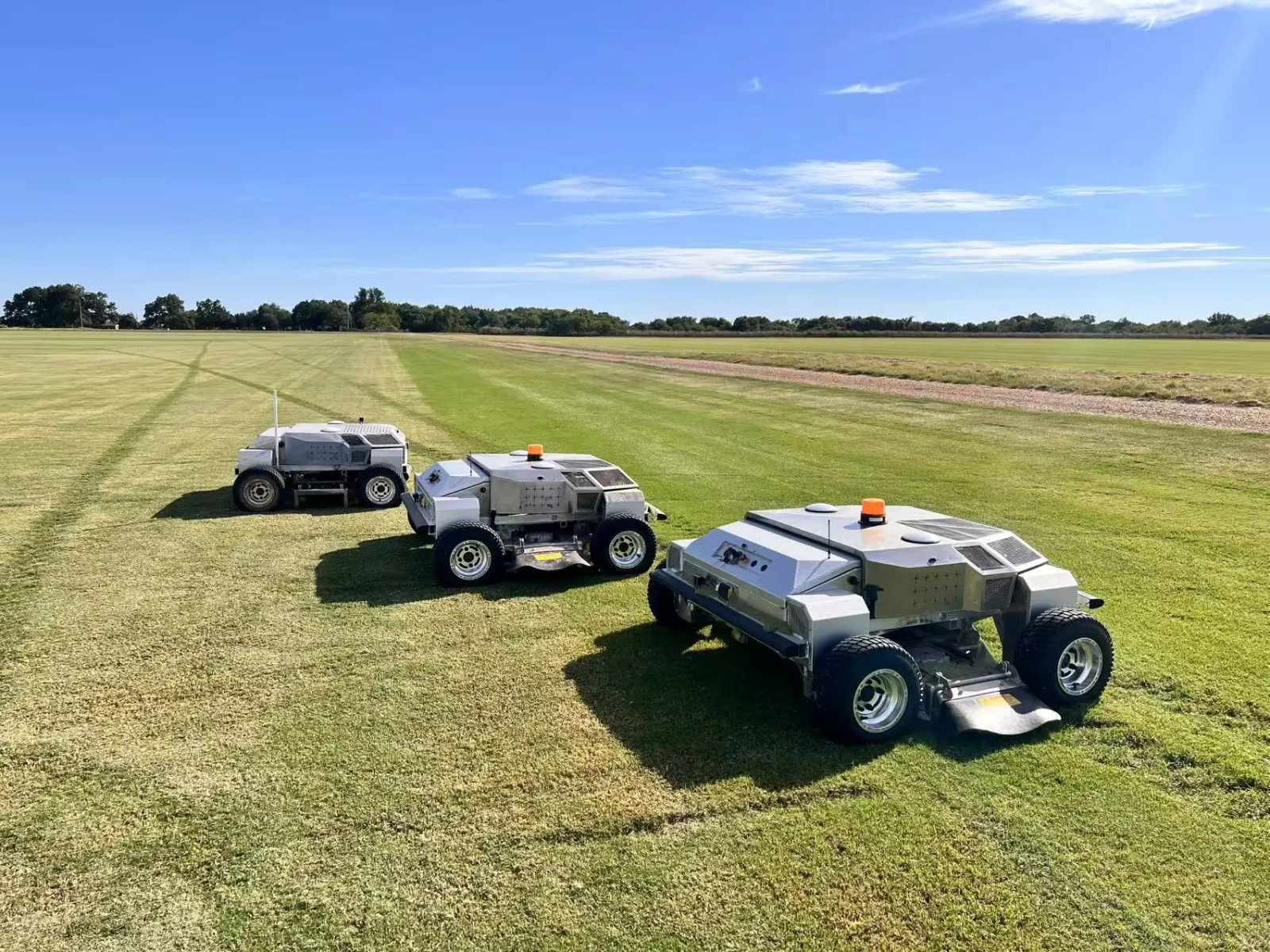
Where a 60-inch autonomous mower earns its keep
The A60i is not a general-purpose answer. It pays on ground where the same large area is cut over and over, where the passes can be long, and where the people currently doing it are hard to hire and better used somewhere else. Twelve hours of mowing on one tank and a body light enough not to mark the ground are what make that repeatable week after week.
Golf courses and driving ranges
Roughs, ranges and practice grounds cut overnight or between play, with repeatable striping and the crew's morning freed for detail work rather than laps of the same acreage.
SodSod and turf farms
The application with the most machine hours behind it. Enormous open runs, relentless cutting frequency, and a crop where machine weight shows up in the finished roll.
AviationAirports and airfields
Hundreds of acres of safety-relevant grass, where every mowing hour also costs a badge, an escort and a coordination window.
SolarSolar farms and utility sites
Vegetation control between and around arrays, on ground where sending a crew in with handheld equipment is slow, hot and expensive, and where growth never stops in season.
SportsSports fields and school campuses
Complexes where cutting has to happen on a fixed schedule around bookings, regardless of whether the grounds department is fully staffed that week.
PublicParks and municipal grounds
Public ground carrying a permanent mowing backlog, where the constraint is a hiring problem that budget alone has not fixed for several seasons.
TradeLandscape contractors
Large accounts where an unattended machine changes crew capacity, route density and how the work gets bid in the first place.
TerrainSlopes and rough terrain
Banks, ditch lines, margins and overgrown ground where two-wheel-drive machines slip, stall and leave patches for somebody to come back to with a trimmer.
The common thread
Look across those six and the same property characteristics keep appearing. If your site has most of them, the machine is worth costing out. If it has few, it probably is not.
- Acreage, not square footage. Enough ground that a 60-inch deck gets to work rather than turn.
- Long runs. Open lines where the machine spends its time cutting.
- Repetition. The same area, cut weekly or more, across a long season.
- A labour constraint. Not enough people, or people worth more on other work.
- A time window. Ground that has to be finished before play, before school, before the site opens.
- Rotary-appropriate turf. Roughs, fields, margins and open acreage — not greens or tees, which need a reel.
Where the arithmetic works, and where it does not →
Also proven on
Same profile, no dedicated page yet — ask and we will answer against your specific site: cemeteries and memorial parks, highway and roadside verges, business and industrial parks, orchards and vineyards, equestrian and polo grounds, large private estates and ranches, RV and caravan parks, and utility and substation compounds.
The common test is the same one above: open acreage, long runs, cut repeatedly, short of people.